Smart Mobility Meets Mobile World Congress
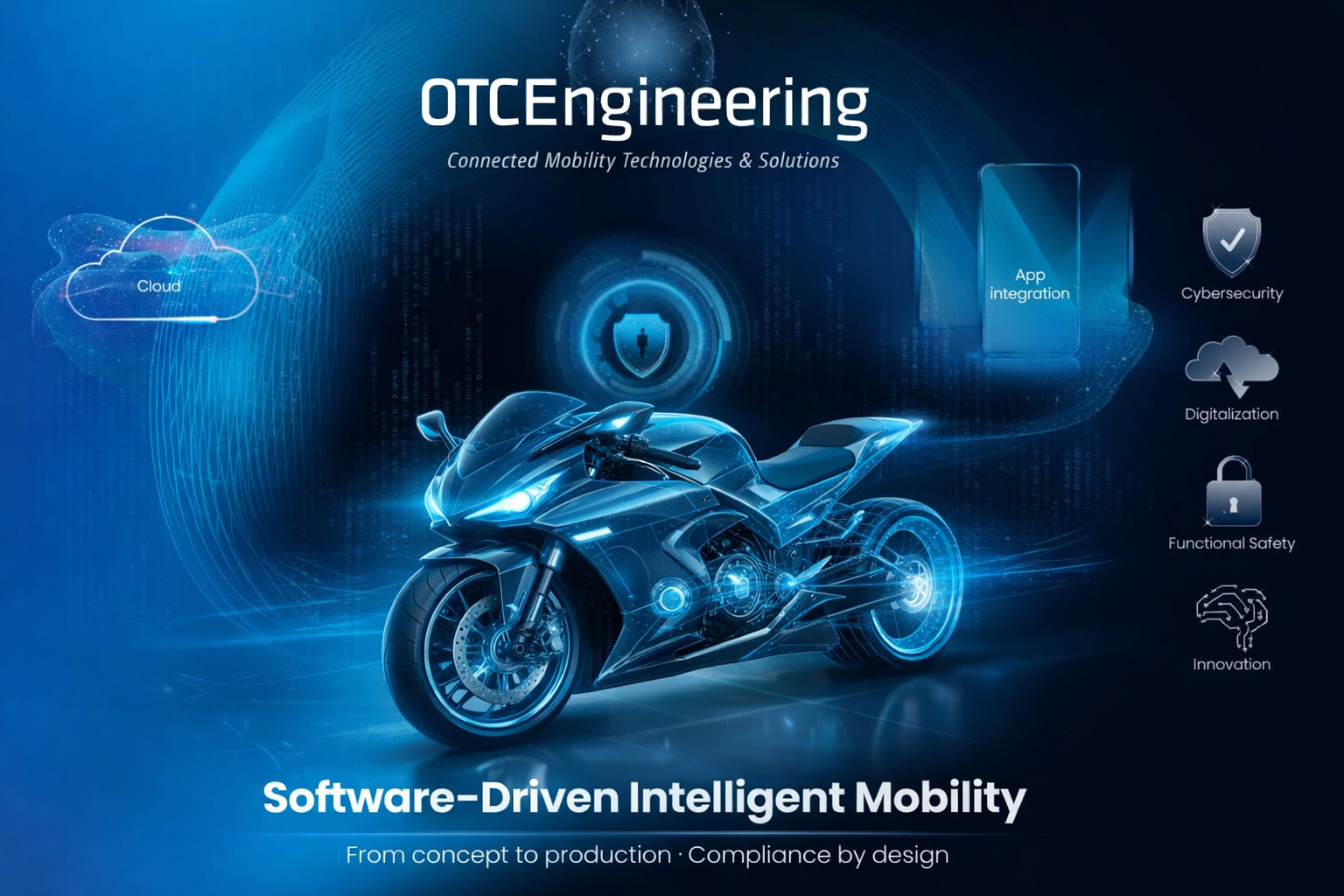
OTCengineering at MWC26: where intelligent infrastructure, software-defined vehicles, and the next-generation mobility stack converge under one roof in Barcelona.
Setting the Scene
Mobile World Congress used to be a telco show. In 2026, it's something more interesting for us: the place where the connected vehicle conversation happens at full speed, across industries, in a single week. OEMs, chipset vendors, connectivity platforms, startups rethinking urban mobility — all in the same building.
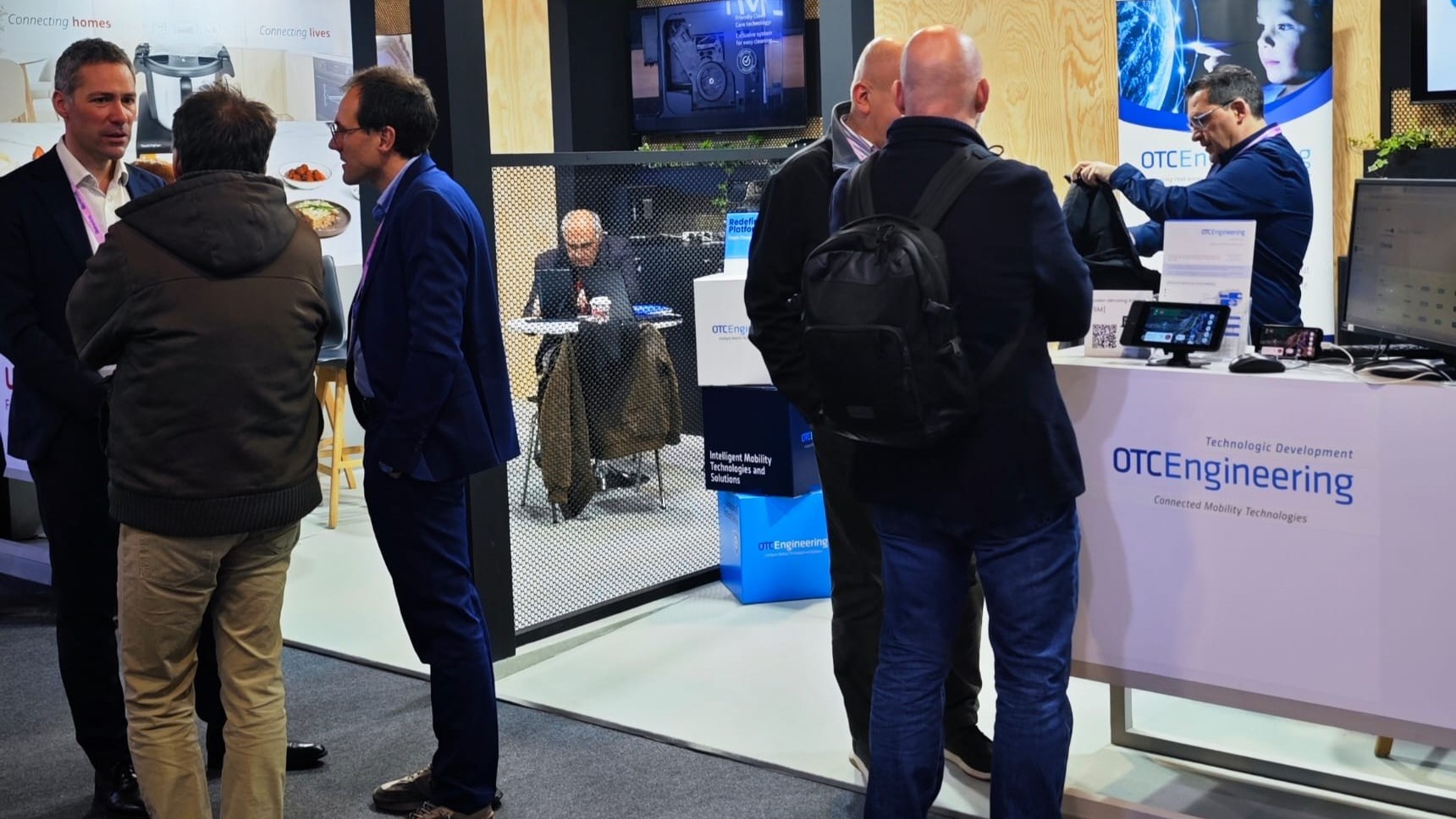
OTCengineering attended MWC26 as both observers and participants, scanning the landscape for the technical convergences that will define our engineering roadmap and, more importantly, the digitalization and connectivity projects we are accelerating for our clients across the US, Europe, and Asia.
| 105K+ ATTENDES | 200+ COUNTRIES REPRESENTED | 58% CROSS-INDUSTRY ATENDEES |
What we brought to the table
In 2026, the smart mobility narrative has permeated every hall in Fira Gran Via. From OEM software platforms and V2X (Vehicle-to-Everything) communication stacks to 5G-Advanced NTN (Non-Terrestrial Network) positioning for autonomous guidance, the congress has become as relevant to a mobility engineer as to a telecom operator.
The reactions were consistent: when we explained how we approach connectivity architecture on real programs, or how we integrate cybersecurity and functional safety not as compliance layers but as engineering constraints from system concept phase, people leaned in. That's the OTCengineering know-how that's hard to communicate in a product sheet — and MWC gave us the context to make it land.
Key Summit Tracks
The Mobility Summit within MWC26 structured its agenda around four axes that align precisely with OTCengineering's technical focus areas:
| Track 01 5G-Advanced & 6G for Mobility | Track 02 Software-Defined Vehicle Architecture |
| Track 03 Cybersecurity & Functional Safety | Track 04 Light Mobility & Micromobility Connectivity |
The technical tracks at MWC26 validated what we've been seeing on live projects: digitalization and connectivity are no longer roadmap items — they're present-tense engineering challenges. And the companies navigating them well are the ones that treat cybersecurity and functional safety as foundational constraints, not afterthoughts.
The cybersecurity track drew particular attention from OTCengineering's technical team. As UN-R155 and ISO/SAE 21434 become baseline compliance requirements across markets, the industry is beginning to treat cybersecurity not merely as a regulatory checkbox, but as a genuine engineering discipline that must be integrated from system concept phase onward. Functional Safety (ISO 26262) is following the same trajectory, embedding itself as a transversal constraint across all ECU development and V2X communication layers.
OTCengineering's Presence: What We Tracked
Our presence at MWC26 was purposefully focused. With a strategic priority on digitalization and connectivity projects for 2026, we used the congress to validate our technical positioning, benchmark against tier-1 suppliers and connectivity platforms, and identify where our engineering know-how — built across mass market, bus & truck, and premium vehicle segments — maps to the emerging demands of the market.
Who we met — and what they were working through:
01 — OEM / Tier-1 SDV architecture & cybersecurity integration
Mature programs scaling fast — looking for engineering partners who understand both the standards landscape and the delivery pressure.
02 — Connectivity / Telco 5G-NR V2X and vehicle-side integration
Strong infrastructure capability, but the vehicle E/E layer is unfamiliar territory. A clear complementarity with our expertise.
03 — Engineering consultancies Functional safety & ISO 21434 on active programs
Peers navigating the same regulatory frameworks — conversations that quickly moved from methodology to potential collaboration.
04 — New mobility players Light mobility entering automotive-grade requirements
Fast-growing teams discovering that connectivity and safety engineering can't be deferred. Exactly the inflection point where our know-how adds most value.
The pattern across all of them: the technical challenges are converging. Whether the platform is a premium passenger vehicle, a commercial fleet unit, or an L-category urban mobility product — the underlying engineering problems around connectivity, OTA lifecycle, cybersecurity, and functional safety are structurally the same. The regulatory frameworks differ in detail, but the engineering discipline required is consistent. That's precisely the space OTCengineering occupies.
What MWC26 confirmed about the industry direction
Three signals stood out clearly from the summit content and from the conversations on the floor.
First, cybersecurity has moved from compliance task to engineering discipline— organisations ahead of the curve are integrating TARA and security-by-design from concept phase, not at certification.
Second, the Software-Defined Vehicle is forcing a rethink of the entire supplier relationship: when software update cycles decouple from hardware, the traditional Tier-1 model shifts, and firms that can operate across that boundary hold a structural advantage.
Third, light mobility is no longer a separate conversation— the same engineering rigour automotive has built over decades is now required in e-cargo, L-category, and shared mobility, faster and leaner than ever before.
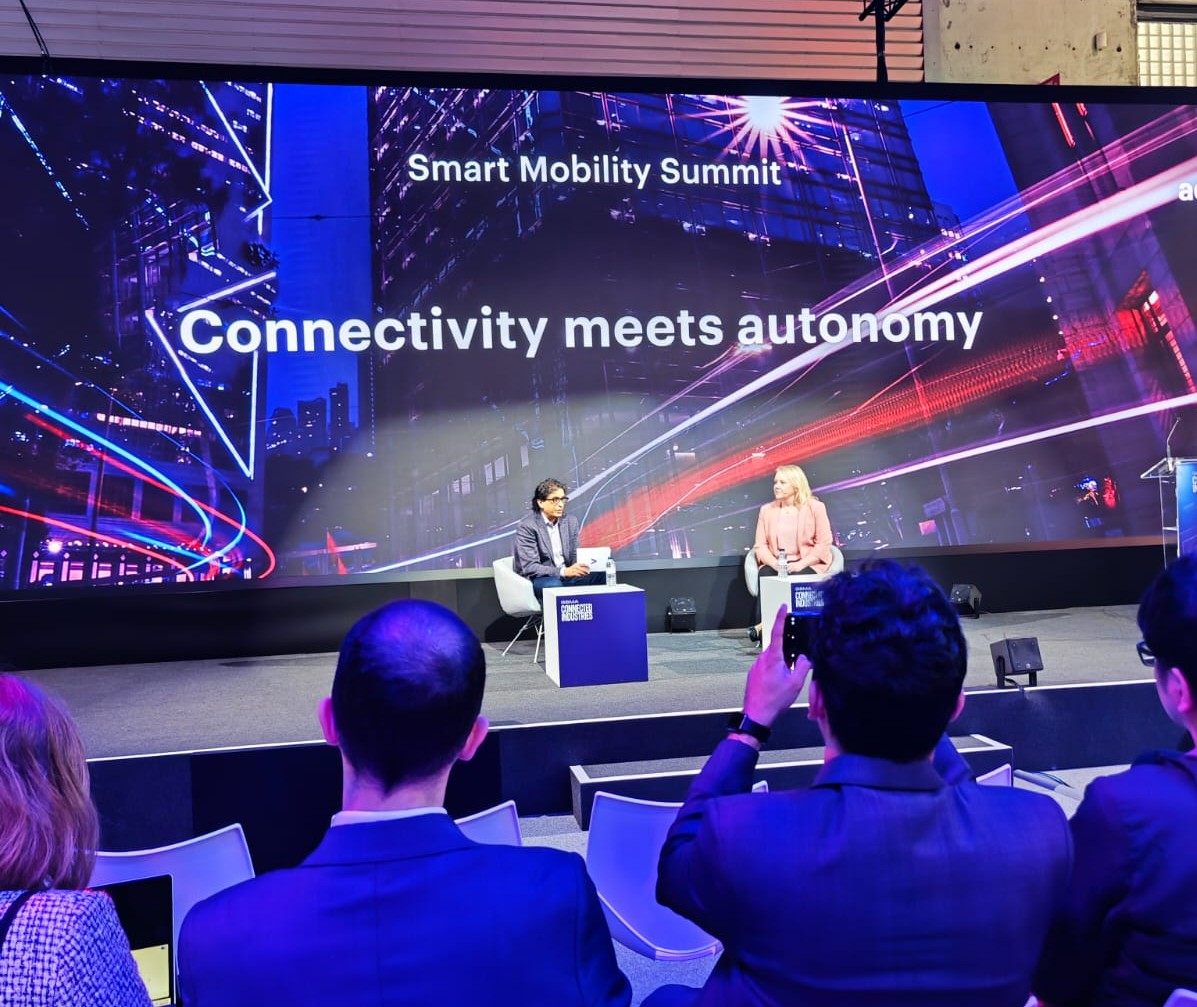
Smart Mobility Summit Conference during MWC26 Barcelona
Continue the conversation
Connected vehicle & smart mobility projects
Connectivity architecture, cybersecurity, functional safety — across all mobility segments, from mass market to premium and light mobility.