What Battery Show told us about edge-to-cloud battery management and the EV industry
One day, over 20 conversations, and a sector navigating a more complex moment than the headlines suggest.
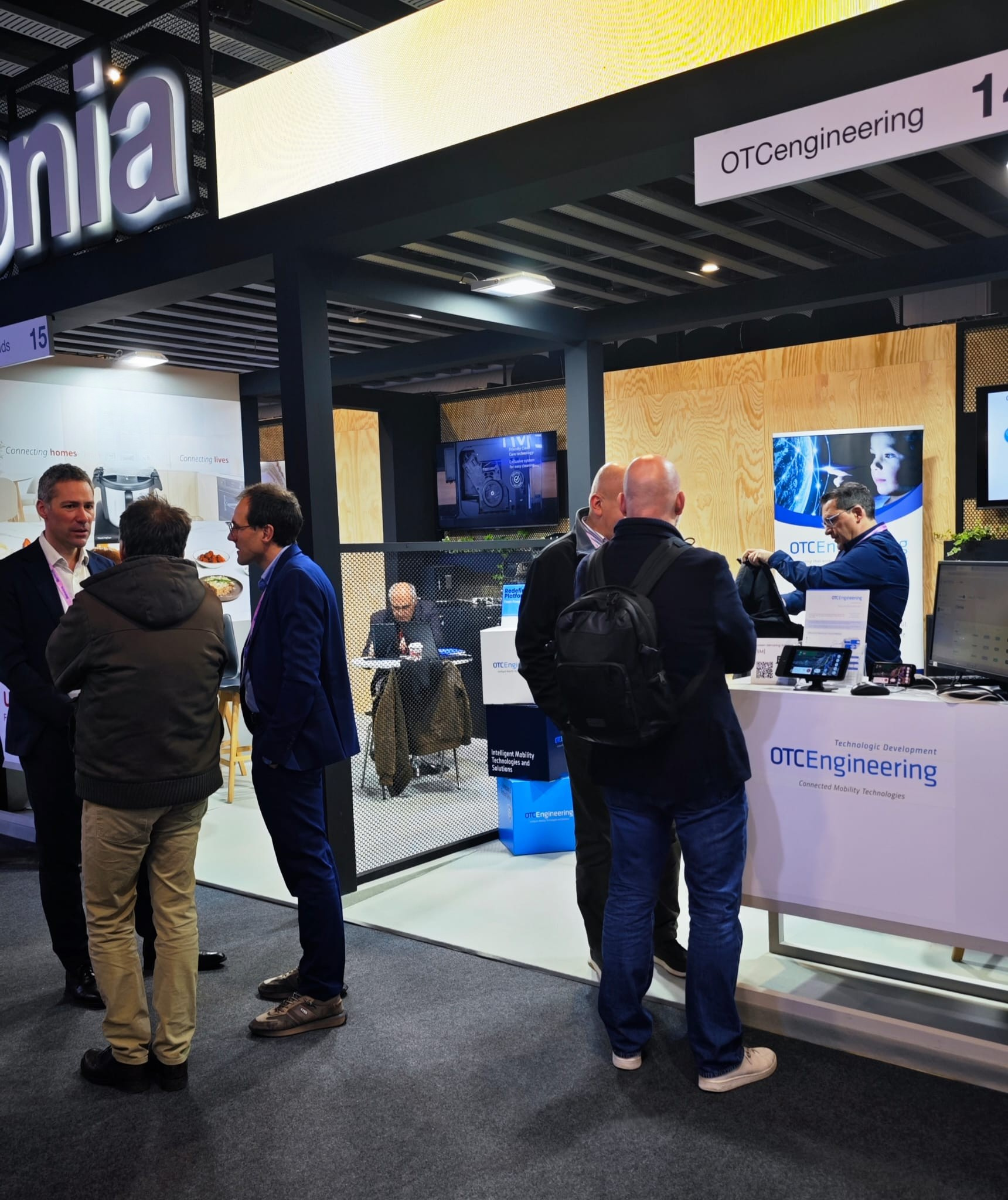
The Battery Show Europe is a good barometer for where the industry stands. This year, the reading was clear: the sector is navigating a complex moment, but the move toward edge-to-cloud battery management is accelerating — and the engineering foundations to act on it are already in place.
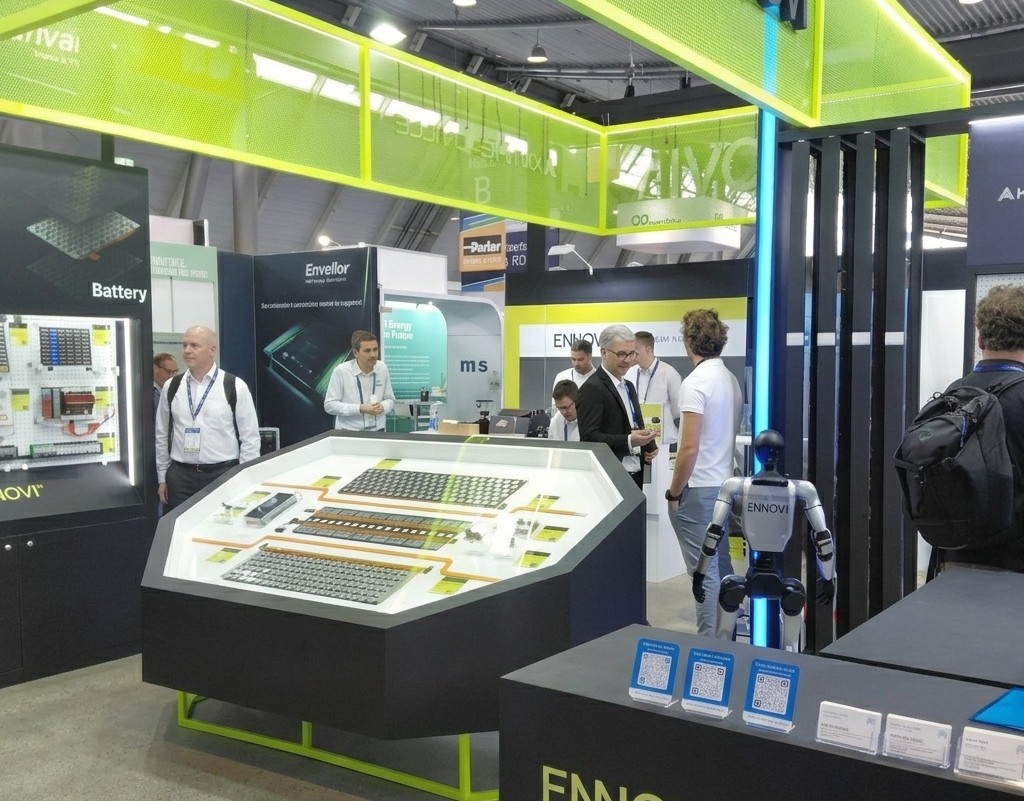
After a full day at Messe Stuttgart and over 20 conversations with Tier-1 suppliers, pack manufacturers, module builders, and OEM-adjacent teams, five themes stood out consistently. Not as isolated observations, but as a pattern across the whole event.
Battery Show Stuttgart 2026
READING BETWEEN TE LINES
Edge-to-cloud battery management: the differentiating layer in a consolidated market
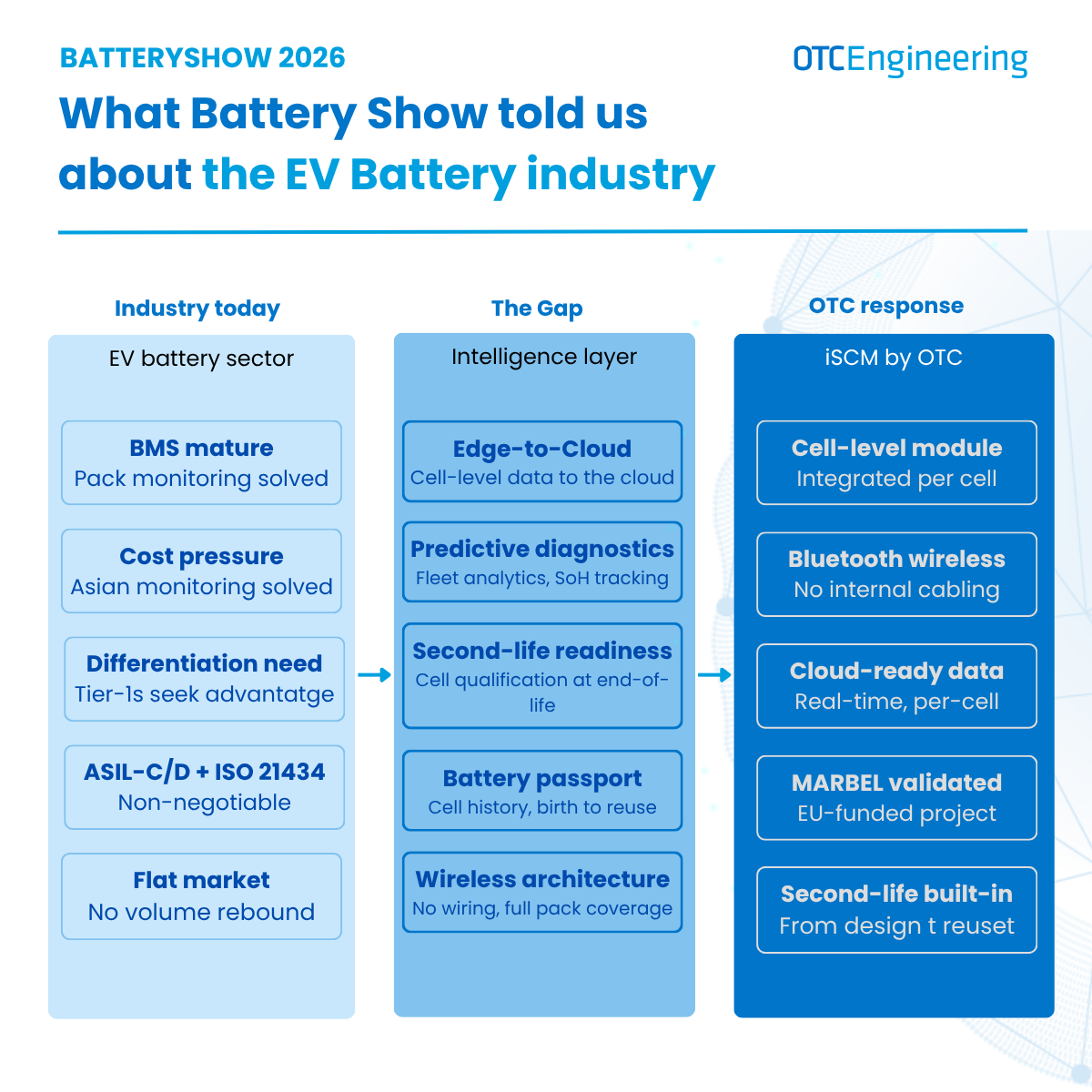
The technology story at this year's show wasn't about breakthroughs. In fact, BMS architectures and pack monitoring are now established. What's generating interest — and real commercial conversations — is the layer above: how battery systems connect to the digital world, how data flows from cell to cloud, and how that intelligence creates value beyond the pack itself.
The demand for differentiation is real and urgent. As a result, every Tier-1 supplier, every pack builder, and every module manufacturer is looking for ways to stand apart. The answer isn't in raw specifications. Instead, it's in the software and connectivity layer that makes a battery system smarter, safer, and more serviceable over its lifecycle.
One requirement that came up repeatedly was the Battery Passport. The EU Battery Regulation is making cell-level traceability a hard compliance deadline. However, manufacturers are only beginning to understand what this means in practice. They need to collect, structure, and report data across the full lifecycle — from production to second life. In short, the passport isn't just a regulatory checkbox. It's a new data layer that needs to be designed in from the start.
Functional safety (ASIL-C/D) and cybersecurity (ISO 21434) were not optional topics. On the contrary, they came up in every single conversation as baseline requirements. Moreover, companies that haven't built these constraints into their process from the start are finding it harder to compete at the Tier-1 level.
Finally, collaboration was the other consistent thread. Nobody expects to solve these challenges alone. Therefore, the companies that moved forward with confidence are the ones building ecosystems — combining hardware expertise, software capability, connectivity, and compliance in partnerships.
OTC Engineering · Cell-to-Cloud
The iSCM: our answer to the edge-to-cloud opportunity in EV batteries
The iSCM (Intelligent Smart Cell Manager) is a wireless monitoring module that integrates directly at the cell level — no internal wiring, Bluetooth communication, real-time data from each cell to the cloud. Developed within the EU-funded MARBEL project, it's a concrete example of the edge-to-cloud architecture the industry is converging on: cell-level intelligence, predictive diagnostics, and second-life qualification built in from day one.
Continue the conversation
EV battery & edge-to-cloud projects
Cell-level monitoring, battery passport compliance, functional safety — from pack design to second-life qualification.