Inside 30 conversations at IAA Transportation 2026
What 30 conversations at IAA Transportation 2026 taught us about the SDV knowledge gap
Three days at IAA Transportation 2026 in Hannover. More than 30 meetings with OEMs, Tier-1 suppliers and technology players. Different roles, different companies, different vehicle segments. And one conversation that kept coming back.
When we asked people from engineering, product and strategy how software and the Software-Defined Vehicle (SDV) would impact their business, most gave us a version of the same answer: "We are clueless about what SDV can benefit us. It's hard for us to understand. Software engineers think differently."
We heard it enough times that it stopped feeling anecdotal. This post is about what sits behind it.
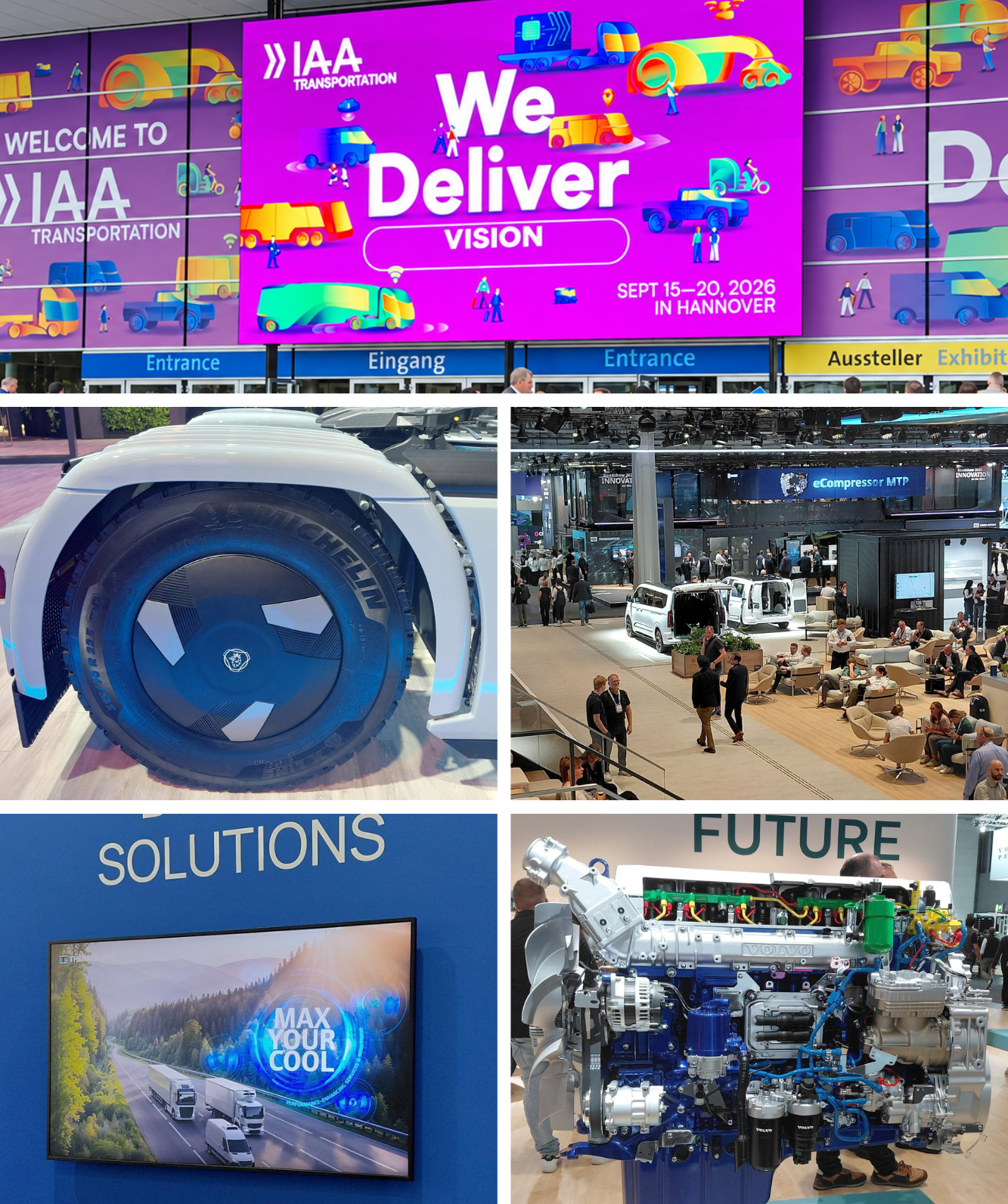
IAA Transportation Hannover 2026
What we heard, role by role
From engineering. Hardware and mechatronics teams know their domain deeply, but the SDV changes who defines the roadmap. When software sets what the hardware needs to do, decisions that used to be closed at start of production stay open for the whole vehicle lifecycle.
From product. The difficulty is translation. Product teams are asked to build a value proposition around capabilities such as post-sale features, personalisation and updates over the air, without a clear picture of what is technically possible or what it costs to maintain.
From strategy. SDV often lives as a budget line or a technology programme, not as a lever for business model and margin. When hardware differentiation narrows, the question of where margin comes from is the strategic one.
Nobody in these conversations was questioning whether software matters. The question was how to make it useful for their own business.
Why it happens: it's not a talent problem, it's a mental model problem
Software is not magic. It has been the engine of most industrial innovation for forty years. What makes the SDV feel foreign is that it asks two working models to coexist in the same organisation:
- DevSecOps rhythm: short cycles, continuous delivery, updates over the air.
- V-model rigour: structured development for safety, security and compliance by design.
Mobility organisations were built around the second. The SDV needs both. When a software engineer says "we can ship this next sprint" and a systems engineer answers "it needs to be validated against the full requirements chain", both are right. They are working under different assumptions, and the gap is in how to combine them.
Where the value actually lands
Once the gap is named, the useful question becomes: what does software actually do for a manufacturer? Across the conversations, five answers kept surfacing. Software is how you:
- Build a differentiator a competitor can't copy in six months
- Personalise the product by user, geography and use case
- Add features after the vehicle has left the factory
- Improve efficiency across the whole lifecycle
- Capture margin where hardware alone no longer can
None of these is a hardware story. The next generation of commercial vehicles won't win on horsepower or torque. It will win on how intelligent the product becomes once it is on the road, and on how much of that intelligence the manufacturer owns.
Signals that the industry is moving
It wasn't all gap. The most interesting conversations were with teams that had stopped debating whether and started asking how, and how to do it while current programmes keep running. Common traits:
- They look for partners who understand both worlds: the vehicle E/E layer and the cloud side.
- They treat software and cybersecurity as a system-level concern from day one.
- They plan the update lifecycle as part of the vehicle programme, not afterwards.
Closing
If software still feels like a foreign language inside your organisation, that is the gap worth closing this year. In the next issue of Moving Forward we unpack what closing it looks like in practice, from the architecture decisions to the regulatory frameworks that are already reshaping how programmes are built.
Subscribe to Moving Forward Newsletter on Linkedin