IZB Wolfsburg 2026: Four Trends Shaping Automotive Software
What two days of visits and meetings at IZB Wolfsburg told us about hardware, software and AI in European automotive.
A strong industrial base, and a shifting source of value
Europe’s automotive industry remains a world leader in the physical vehicle: mechatronic systems, wiring harnesses, connectors, lighting, interiors and production components. That was clear at IZB Wolfsburg, where most exhibitors were focused on tangible components, with a shared sense of urgency: be faster, more efficient and more competitive.
Yet the value that defines the customer’s relationship with the vehicle is increasingly digital. Software, AI and the user experience are where differentiation, and recurring revenue, are being built. We spent two days visiting exhibitors and meeting partners, and four themes stood out.
1. Screens and HMI: the visible face of software
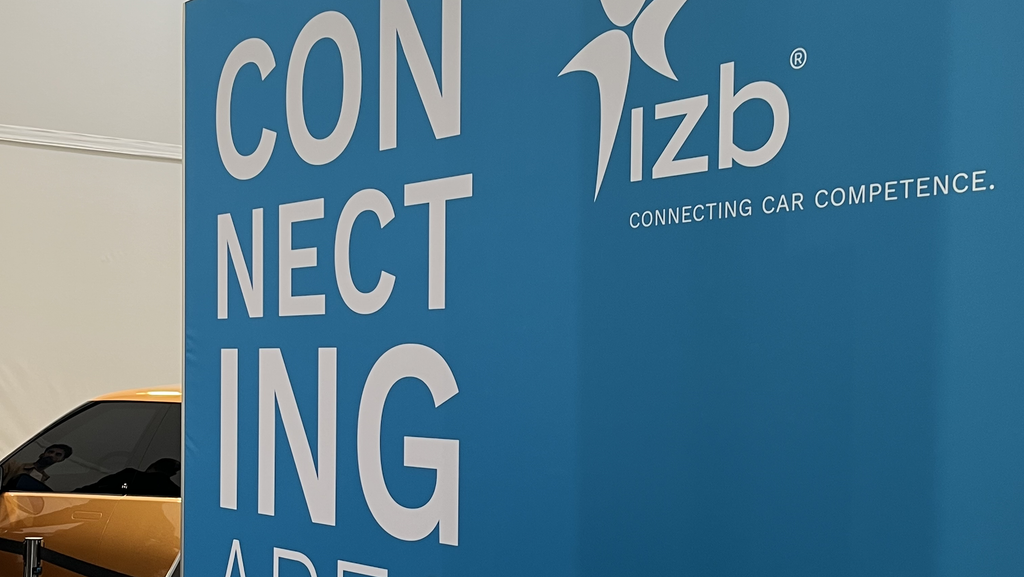
Interiors are the clearest sign of the change. Large displays, multi-touch interfaces and digital mirrors now concentrate a growing share of perceived value. Many of the most advanced solutions we saw came from Asian suppliers, and they appear in both Asian and European brands.
Europe is a strong integrator, but integrating other players’ screens is not the same as leading the experience. For OEMs and Tier 1 suppliers, the question is how much of the HMI architecture, rendering, security and update chain they want to own.
Our take: whoever controls the software architecture controls the experience. Embedded software, clear interfaces and a robust update strategy matter more than the display itself.
2. Platforms are turning into ecosystems
Software-defined vehicle platforms are no longer built by a single player. We saw more joint offers, where an established real-time platform is combined with a partner’s middleware and upper software layers.
This makes selective partnerships, including between Europe and Asia, an obvious path. But the difficulty shifts to the interfaces: who validates the whole stack, how traceability is kept across teams and companies, and how software is reused across vehicle programs without rewriting it for each platform.
Our take: integration and validation are becoming the real engineering challenge. Our experience in multiplatform digitalization projects and ASPICE-compliant validation applies directly. The earlier the validation strategy is defined, the lower the cost of change.
3. AI: from showcase to practical value
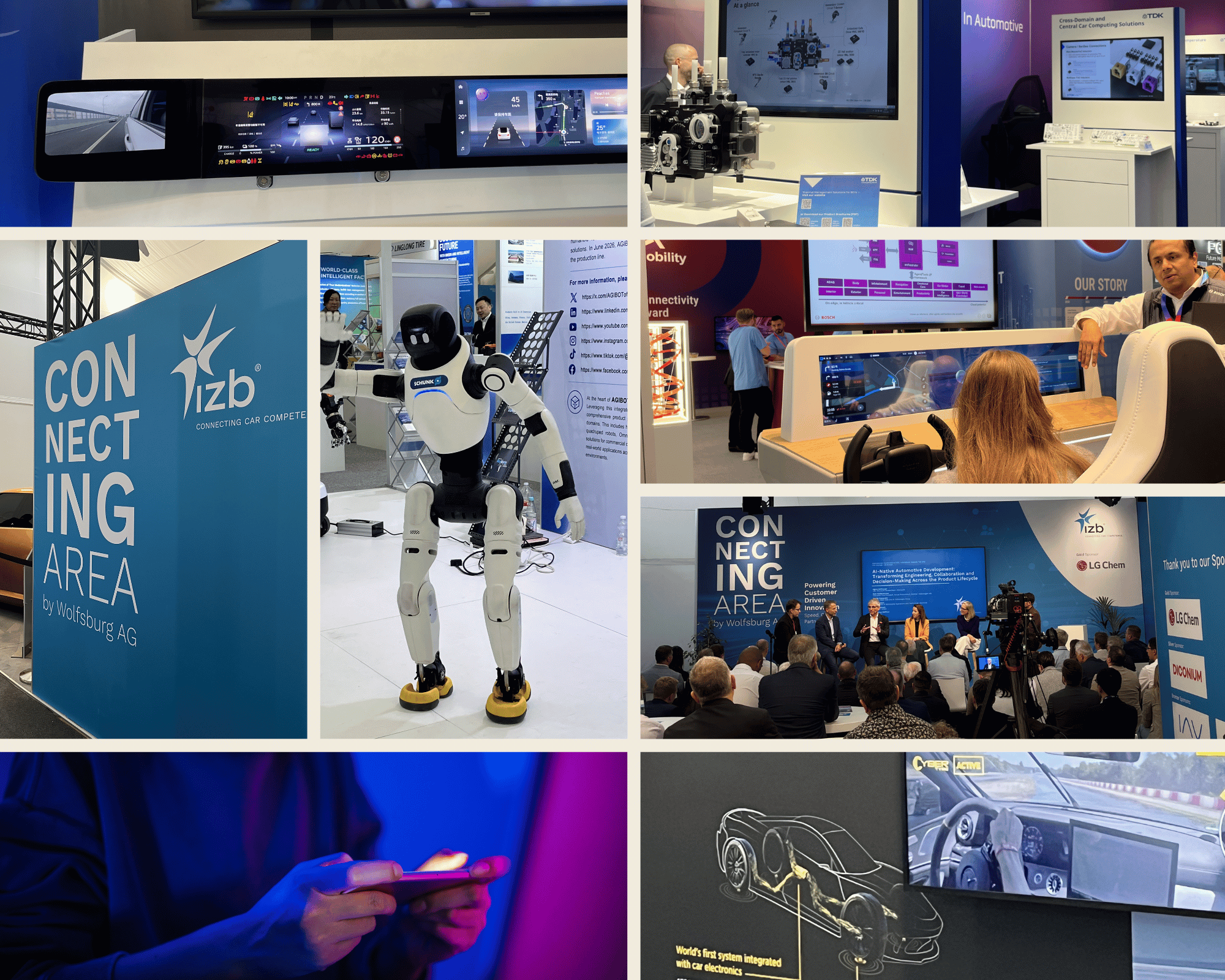
AI appeared in a large share of commercial messages and demonstrations, from humanoid robots to automation systems. It is clearly linked to the need for efficiency, speed and lower costs, especially in cost-driven supply chains.
But the real impact will not come from the most visual elements. It will come from practical applications: quality control, fault diagnosis, anomaly detection, predictive maintenance, simulation-based testing and shorter validation cycles. In-vehicle uses such as driver monitoring and voice interaction are also maturing. If AI does not reduce time, cost or risk, it remains a demonstration.
Our take: AI creates value when it is integrated into the full chain: embedded software at the edge, data flowing to the cloud (edge2Cloud) and a validation process able to cope with systems that learn.
4. The experience beyond the vehicle is still missing
Connected solutions and digital integration beyond the vehicle were a minority on the floor. Yet this is where the business is moving: data, digital services and updatable features with recurring revenue.
Smarter components matter here too. Valves, pumps, door motors and mirrors increasingly carry their own electronics and software, which brings functional safety (ISO 26262) and cybersecurity requirements (ISO 21434, UN R155/R156 at vehicle level). Connected products placed on the EU market also face the Cyber Resilience Act. Addressing them at the start of the design is far cheaper than retrofitting.
Our take: a digital ecosystem is only as strong as its embedded foundation. Our experience in functional safety for valves, and in keyless access innovation, shows how security and safety need to be designed in from day one.
What this means for your roadmap
Europe has industrial excellence that others envy. The challenge is to combine it with software-first thinking: stronger capabilities in software and AI, selective alliances, platforms the company controls, and ecosystems that go beyond the vehicle.
In one sentence: the hard problems are moving from individual features to integration, validation and compliance. That is good news for teams that plan for it early.
At OTCengineering we work on exactly these topics, with embedded software, SDV and edge2Cloud solutions, functional safety and cybersecurity, for major European and Asian OEMs in automotive and light mobility, as well as leading Tier 1 firms.
Is software-first on your agenda? We would be glad to talk, in person or in a short e-call, to see whether this could be a fit. [Contact us →]
Thank you to everyone who took the time to meet with us in Wolfsburg.
Subscribe to Moving Forward Newsletter on Linkedin